Introduction
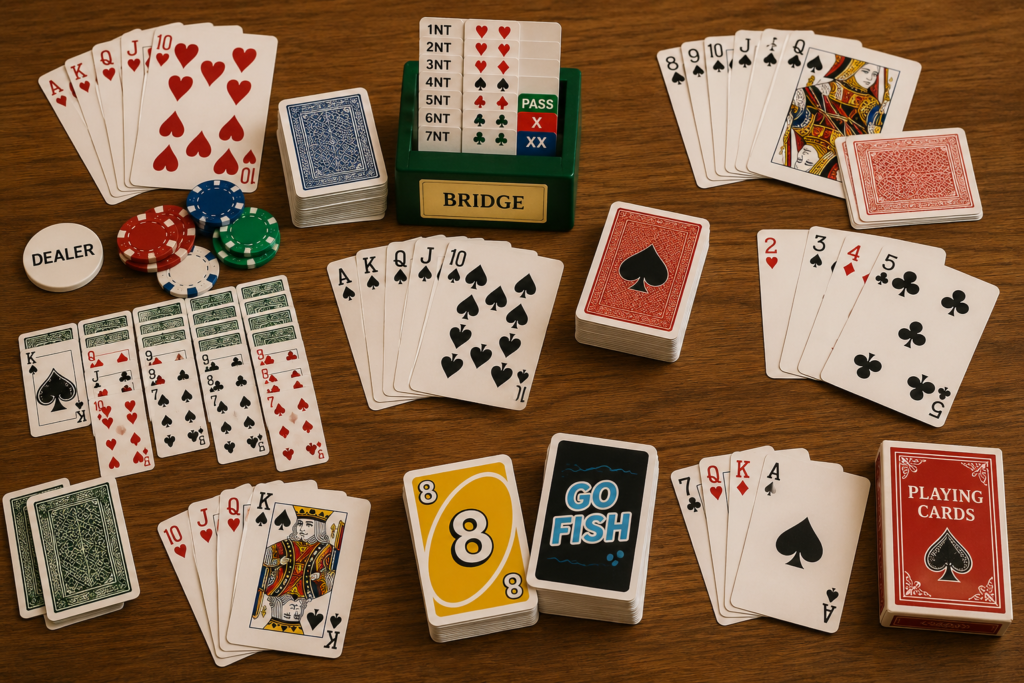
Card games have entertained families, friends, and competitors for generations. Even in a world filled with digital entertainment, classic card games continue to hold their place at game nights, holidays, and casual gatherings. Their simple rules, strategic depth, and social interaction make them timeless favorites for players of all ages.
From fast-paced games that test quick thinking to strategy-based classics requiring patience and skill, card games remain one of the easiest and most enjoyable ways to connect with others. Here are some of the most beloved classic card games people still love to play today.
1. Poker – The Ultimate Strategy Card Game
Poker remains one of the most recognizable and widely played card games in the world. Whether played casually with friends or professionally in tournaments, the game combines skill, psychology, and luck in a way few others can match.
There are several popular variations, including Texas Hold’em, Omaha, and Seven-Card Stud. Players must build the best possible hand while carefully reading opponents and making strategic betting decisions. Bluffing is a major part of the excitement, turning every round into a mental challenge.
Poker’s popularity has grown through televised tournaments and online gaming platforms, but its real appeal lies in its balance of unpredictability and strategy. It’s a game where experience matters, yet beginners can still enjoy the thrill of a lucky hand.
2. Bridge – A Timeless Game of Skill
Bridge is often regarded as one of the most intellectual card games ever created. Played in partnerships, the game requires communication, memory, and strategic planning.
Unlike many casual card games, Bridge involves bidding systems that allow teammates to estimate the strength of each other’s hands. This added complexity makes it especially rewarding for players who enjoy deep strategy and teamwork.
Bridge clubs and tournaments continue to thrive worldwide, particularly among players who appreciate mentally stimulating games. Despite its reputation for being challenging, learning the basics can be surprisingly accessible with practice and patience.
3. Rummy – Simple Yet Highly Addictive
Rummy has remained popular for decades because of its straightforward gameplay and competitive nature. The objective is simple: form matching sets or sequences of cards before your opponents do.
The game rewards observation and quick decision-making, as players must carefully track discarded cards and adjust their strategies. Variations like Gin Rummy and Indian Rummy have introduced new twists while maintaining the original appeal.
One reason Rummy continues to thrive is its flexibility. It works well for casual family gatherings, competitive matches, and even online platforms. The balance between luck and skill keeps every round fresh and engaging.
4. Solitaire – The Perfect Solo Challenge
Few card games are as universally recognized as Solitaire. Often associated with quiet moments and personal relaxation, the game became especially famous through computer versions included in early operating systems.
Solitaire challenges players to organize cards into specific sequences and suits using logic and careful planning. Although luck influences the initial card arrangement, strategic thinking plays a major role in achieving victory.
Its enduring popularity comes from its accessibility. All you need is a standard deck of cards, making it an easy and relaxing pastime almost anywhere. For many people, Solitaire remains a nostalgic reminder of early digital gaming experiences.
5. Hearts – A Competitive Family Favorite
Hearts is a trick-taking game known for its balance of strategy and unpredictability. The goal is to avoid collecting certain penalty cards while forcing opponents into difficult situations.
Unlike games where players aim to score the highest points, Hearts rewards those who can keep their scores low. This unique approach creates a completely different type of competition, encouraging careful planning and tactical plays.
The game is especially popular during family gatherings and casual game nights because it is easy to learn but difficult to master. Each round offers new opportunities for clever decisions and surprising comebacks.
6. Spades – Teamwork Meets Strategy
Spades is another classic trick-taking game that continues to attract loyal players worldwide. Usually played in teams of two, it combines communication, planning, and strategic execution.
Players predict how many tricks they expect to win during each round, adding a layer of tactical depth. Success depends not only on your cards but also on your ability to cooperate effectively with your partner.
Spades remains particularly popular in social settings because it encourages interaction and friendly competition. The game’s balance of teamwork and individual skill helps keep every match exciting.
7. Crazy Eights – Fast, Fun, and Easy to Learn
Crazy Eights is one of the best card games for beginners and younger players. The objective is simple: get rid of all your cards by matching numbers or suits.
Special cards add unpredictable twists, making the game fast-paced and entertaining. Because the rules are easy to understand, new players can quickly join the fun without needing extensive instruction.
Many modern card games, including UNO, were inspired by Crazy Eights. Its simplicity and energetic gameplay have helped it remain a favorite for generations.
8. Go Fish – A Childhood Classic
Go Fish has introduced countless children to the world of card games. Its simple mechanics and interactive gameplay make it perfect for younger audiences.
Players ask opponents for specific card ranks in an attempt to collect matching sets. If the opponent doesn’t have the requested card, the player must “go fish” by drawing from the deck.
Although designed for children, Go Fish still delivers fun and excitement for players of all ages. The game encourages memory skills, communication, and social interaction in an easygoing format.
9. Blackjack – Simple Rules, Endless Excitement
Blackjack is one of the most famous casino card games ever created. The goal is to reach a hand value of 21 without going over while beating the dealer’s hand.
What makes Blackjack unique is its blend of luck and mathematical strategy. Skilled players often use probability-based decisions to improve their chances of winning.
The game’s fast pace and straightforward rules have helped it remain a favorite both in casinos and home settings. Even beginners can quickly learn the basics and enjoy the excitement of each hand.
10. War – The Simplest Competitive Card Game
War is often one of the first card games children learn. It requires minimal strategy, making it easy for players of all ages to understand immediately.
Each player reveals a card, and the higher card wins the round. Ties trigger a “war,” adding excitement and unpredictability to the game.
Although simple, War remains entertaining because of its suspenseful nature. Every card flip creates anticipation, making it surprisingly engaging despite its straightforward rules.
Why Classic Card Games Still Matter
Classic card games continue to thrive because they offer more than just entertainment. They encourage communication, strengthen relationships, improve critical thinking, and create lasting memories.
Unlike many modern digital games, card games are highly accessible. A single deck of cards can provide hours of fun without requiring expensive equipment or internet access. They also adapt easily to different age groups and skill levels, making them ideal for family gatherings, parties, and travel.
Their timeless appeal proves that simple gameplay and genuine social interaction never go out of style.
Reader Questions
What is the most popular classic card game?
Poker is widely considered the most popular classic card game due to its global tournaments, online platforms, and widespread cultural influence.
Which card game is easiest for beginners?
Go Fish and Crazy Eights are among the easiest card games for beginners because they have simple rules and quick gameplay.
Are classic card games good for the brain?
Yes, many card games improve memory, concentration, strategic thinking, and problem-solving skills.
What card games are best for families?
Games like Hearts, Crazy Eights, Go Fish, and Rummy are excellent choices for family gatherings because they are fun and easy to learn.
Why are card games still popular today?
Card games remain popular because they encourage social interaction, provide affordable entertainment, and appeal to players of all ages.
Overall Summary
Classic card games have stood the test of time because they combine strategy, excitement, and human connection in a uniquely engaging way. Whether you enjoy the competitive intensity of Poker, the thoughtful strategy of Bridge, or the simplicity of Go Fish, there is a timeless card game for everyone.
As entertainment trends continue to evolve, these traditional games remain beloved across generations. Their enduring popularity shows that sometimes the simplest forms of fun create the most meaningful experiences.